Billing: plans, Paddle, one-off packs and the plan switch
billing-foundation shows the plan cards, starts checkouts and turns provider webhooks into tier state. The provider plugins are subscription-stripe, subscription-mollie and subscription-paddle. This guide covers the parts added in October 2026: Paddle as merchant of record, one-off packs, the gross plan switch preview and the plan card note. Consent and cancellation are in Billing consumer protection.
Paddle
Section titled “Paddle”Paddle replaces Dodo Payments: subscription-dodo is removed in the first release after 0.393.0. Paddle sells to the customer in its own name and issues the invoice and the VAT. Mount it through the boot option:
await runProdApp({ billing: { paddle: { priceToTier: { [env.PADDLE_PRICE_PRO]: "pro", [env.PADDLE_PRICE_TEAM]: "team" }, oneOffPriceIds: [env.PADDLE_PRICE_CREDITS_100], }, },});paddleEnvSchema({ prices: ["PRO", "TEAM", "CREDITS_100"] }) declares one PADDLE_PRICE_<NAME> slot per price; each must start with pri_.
| Setting | Where |
|---|---|
| API key, webhook secret, tenant binding key, client token | system config keys backed by the secrets store; PADDLE_API_KEY, PADDLE_WEBHOOK_SECRET, PADDLE_TENANT_BINDING_KEY and PADDLE_CLIENT_TOKEN are bridge fallbacks |
environment | sandbox or live; Paddle serves them from different API hosts |
billingLive | master switch; without it a checkout fails with feature_disabled |
| Webhook URL | /webhooks/subscription/paddle |
| Default Payment Link (Paddle dashboard) | <APP_BASE_URL>/billing/paddle-checkout; the feature serves this page itself |
All of them are runtime config, so keys rotate and production goes live without a redeploy. Paddle.js can send any customData from the browser, so a webhook counts only with a valid tenantBinding (an HMAC of the tenant id under the binding key). Rotating the binding key breaks the webhooks of existing subscriptions until they are bound again.
Coming from Dodo: replace createSubscriptionDodoFeature with createSubscriptionPaddleFeature (or billing.dodo with billing.paddle), the DODO_PAYMENTS_* env vars with the Paddle ones, and create the prices again in the Paddle catalog. Subscription prices need quantity minimum and maximum 1. Existing Dodo subscriptions are not migrated; a subscription stays with the provider stored on it.
Plan cards
Section titled “Plan cards”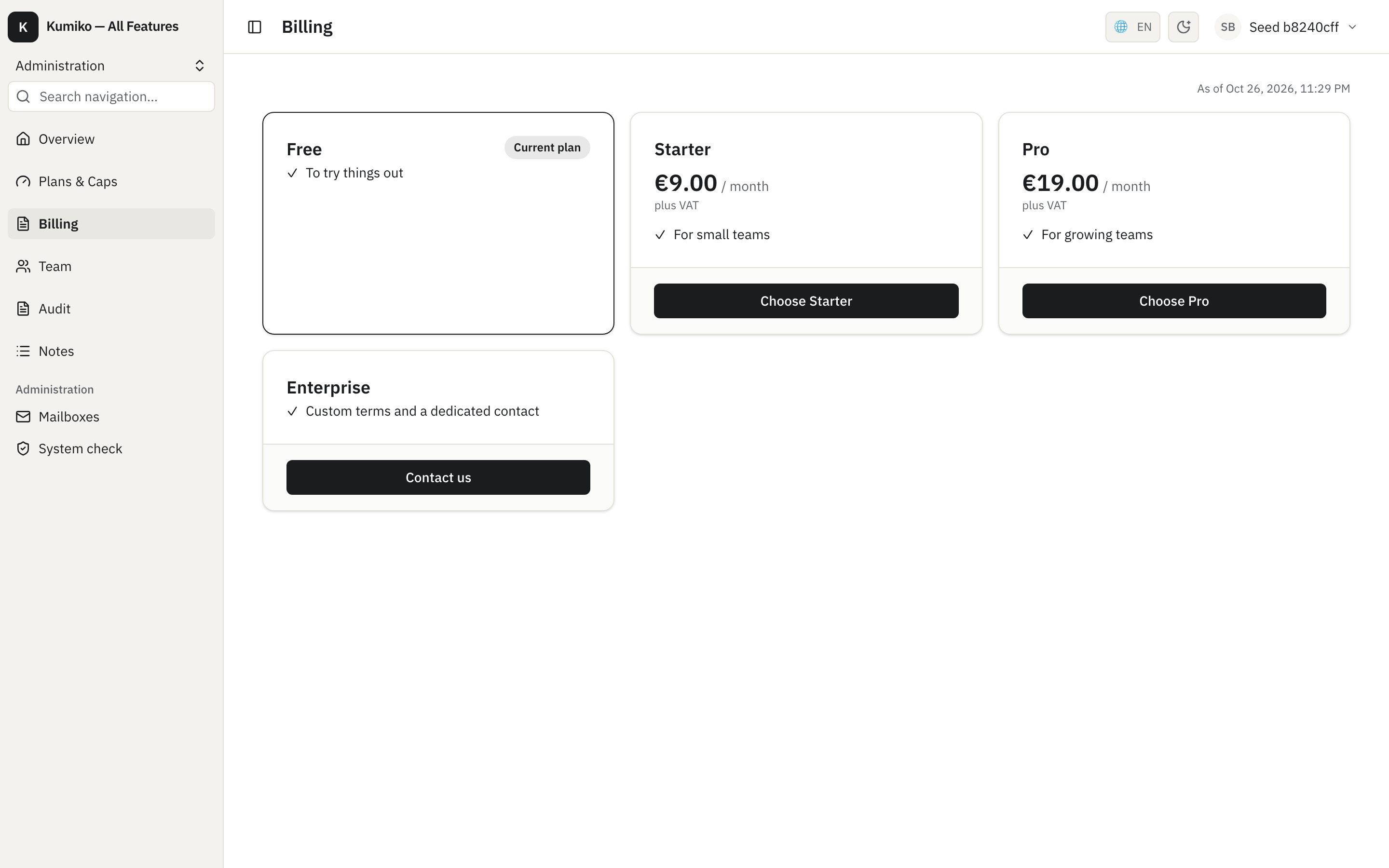
catalog.priceNoteKey puts a small note under every price. Use it when the catalog prices are net:
createBillingFoundationFeature({ baseUrl, catalog: { successPath: "/billing?checkout=success", cancelPath: "/billing", priceNoteKey: "billing-app:plan.price-note", // { en: "plus VAT", de: "zzgl. USt." } contact: enterpriseContactCard, },});The key belongs to the app’s i18n. Without it the cards show no note.
Plan switch with gross amounts
Section titled “Plan switch with gross amounts”With Paddle the switch happens in the app. Before the customer confirms, plan-switch-preview asks Paddle for the proration:
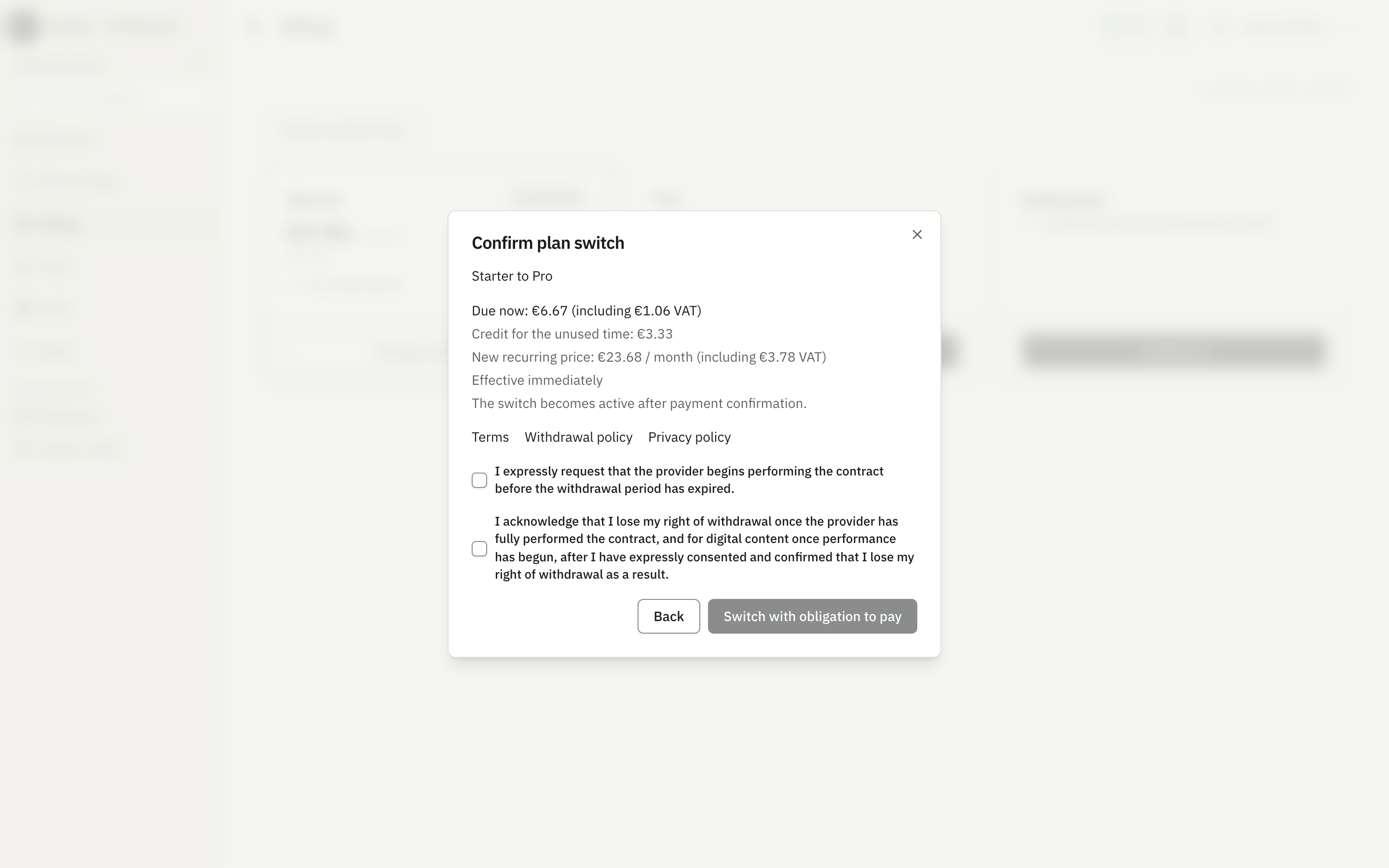
The dialog shows the amount due now with its tax, the credit for the unused time and the new recurring price as Paddle will charge it, tax included. The preview carries amountDueNow, tax, credit, recurringAmount and recurringTax, all in the smallest currency unit; a provider without a tax figure reports null and the dialog leaves the tax part out. The switch becomes active when Paddle’s subscription.updated webhook arrives.
One-off packs
Section titled “One-off packs”A one-off checkout (mode payment) is open only for prices in the provider’s oneOffPriceIds; an empty list closes them all. Without a further gate every listed price is open to any TenantAdmin. authorizeOneOffCheckout adds the app’s own rule, for example “credit packs only on a paid plan”:
createBillingFoundationFeature({ baseUrl, authorizeOneOffCheckout: async (ctx, { tenantId, priceId }) => { const tier = await readTier(ctx, tenantId); if (tier === "free") { return { allowed: false, reason: "pack_needs_paid_plan", i18nKey: "billing-app:errors.packNeedsPaidPlan" }; } return { allowed: true }; },});It runs after the oneOffPriceIds check and before any provider call. A rejection becomes a 422 with reason as the error code and i18nKey as the message.
A paid pack arrives as payment-received (PAYMENT_RECEIVED_EVENT_QN) with priceId and quantity. Multiply the credits by quantity; an absent value means 1. Set the quantity limits of pack prices in Paddle on purpose. The pack size can live in Paddle too: custom_data.credits on the price or product arrives as ProviderPrice.metadata.credits.
r.job({ name: "credits:grant", trigger: { on: PAYMENT_RECEIVED_EVENT_QN }, handler: async (payload, ctx) => { const credits = CREDITS_PER_PRICE[payload.priceId] * (payload.quantity ?? 1); await grantCredits(ctx, credits); },});Caps without a limit
Section titled “Caps without a limit”cap-overview shows a card per cap with usage, limit and a progress bar. For a cap whose limit should stay private, or a pure usage meter, set showLimit: false:
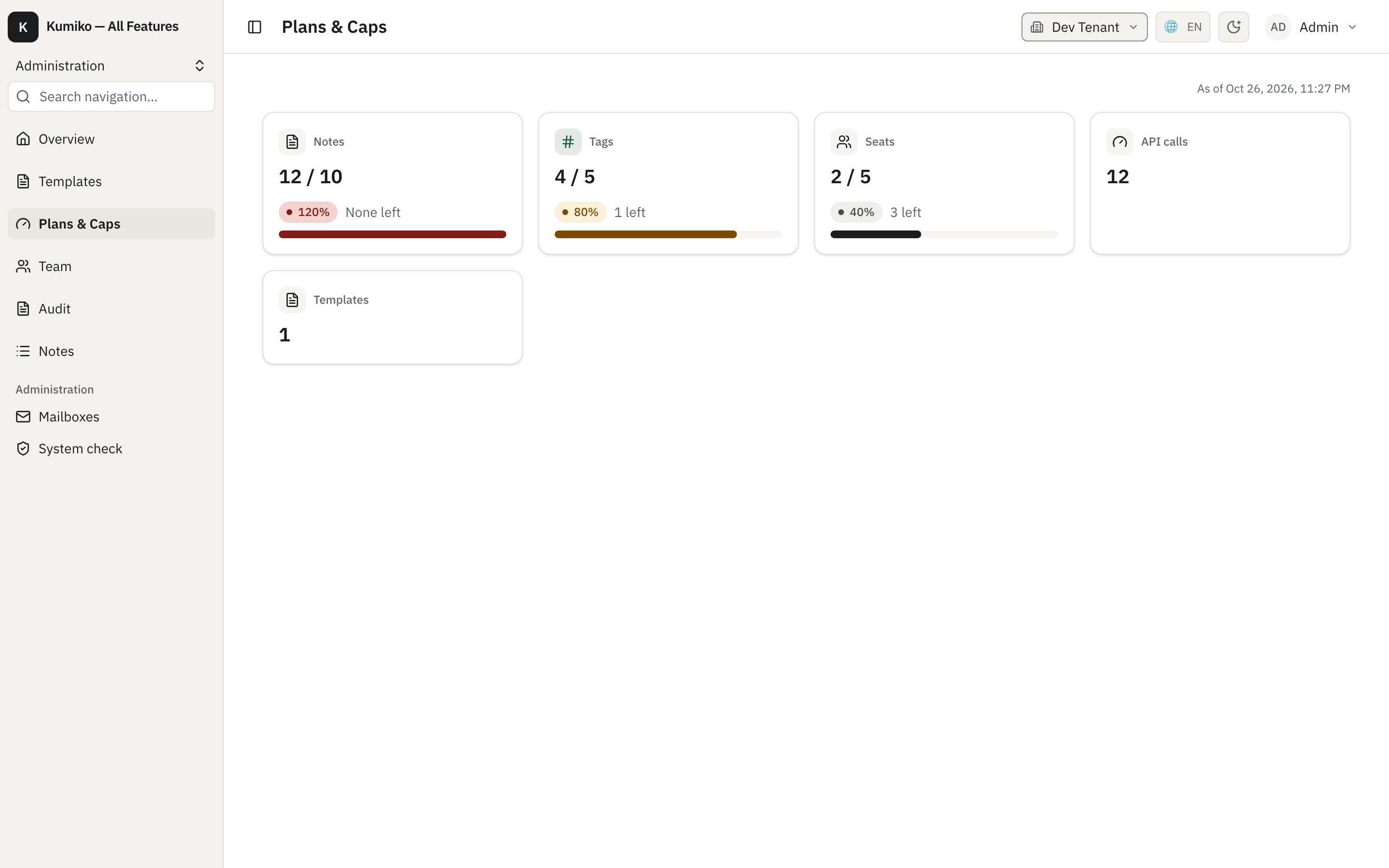
{ id: "templates", label: "app:caps.templates", usage: countTemplates, limit: () => null, showLimit: false }The card then shows the counter only. The limit is not sent to the client at all; enforcement stays with cap-counter. To show selected caps on a dashboard, use the cap cards panel with capKeys; see the screen layout reference.